
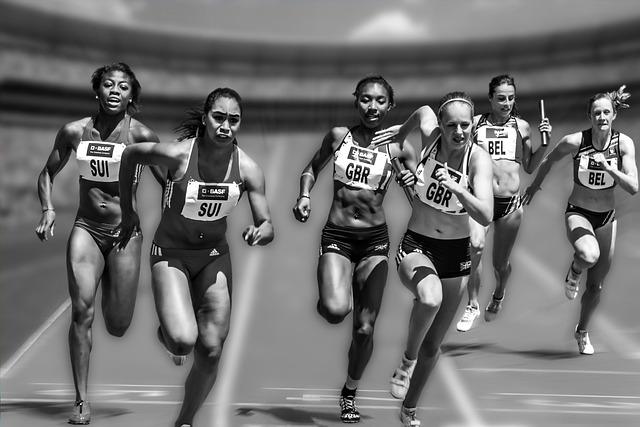
The International Olympic Committee (IOC) has announced a controversial decision to ban transgender women from competing in female events at the Olympic Games. In a move that has ignited widespread debate across the sporting world, the IOC cited concerns over fairness and safety as key factors influencing the policy change. The new ruling marks a significant shift in the committee’s approach to inclusion and participation, sparking reactions from athletes, advocacy groups, and sporting organizations globally. This article explores the implications of the ban, the arguments from both supporters and critics, and what it means for the future of transgender athletes in elite competition.
IOC implements strict eligibility criteria for transgender women athletes at the Olympics
The International Olympic Committee has introduced rigorous measures restricting the participation of transgender women in female Olympic events. These newly established standards mandate that transgender women athletes must demonstrate a testosterone level below 2.5 nmol/L for at least 36 months prior to competition. Additionally, athletes must undergo regular hormonal assessments to ensure compliance, effectively barring those who cannot meet these stringent requirements from competing in women’s categories.
Key points of the IOC’s eligibility framework include:
- Mandatory hormone therapy for a minimum of three years before Olympic participation
- Regular monitoring of testosterone levels to maintain fairness in competition
- Implementation of individualized assessments to evaluate physiological advantages
| Criteria | Requirement |
|---|---|
| Testosterone Level | Below 2.5 nmol/L |
| Duration of Hormonal Treatment | 36 Months Minimum |
| Testing Frequency | Quarterly |
Impact of the ban on transgender athletes and the broader sports community
The recent ban by the IOC has sparked significant debate within both the transgender community and the wider sports environment. For transgender women athletes, the decision represents a profound setback, curtailing opportunities they have long fought to access. Many argue that exclusion not only undermines their years of dedication and training but also exacerbates feelings of marginalization. The ban has ignited concerns that sports institutions may be prioritizing perceived fairness over inclusion, potentially eroding the spirit of diversity that global competitions strive to uphold.
Beyond individual athletes, the decision sends ripples across the broader sports community, prompting reflection on how policies impact all stakeholders. Key consequences include:
- Reduced participation: Young transgender athletes may feel discouraged from pursuing competitive sports.
- Policy fragmentation: Different sports federations may adopt inconsistent regulations, leading to confusion and controversy.
- Public discourse intensification: Debates around gender identity and fairness are likely to dominate media and fan discussions.
| Stakeholder | Primary Concern | Potential Outcome |
|---|---|---|
| Transgender Athletes | Discrimination, exclusion | Decreased representation |
| Sports Organizations | Maintaining fairness | Policy challenges |
| Fans and Media | Ethical debates | Polarized opinions |
Debate over fairness and inclusivity in competitive sports intensifies
In recent weeks, the sports world has witnessed mounting tensions as governing bodies strive to balance fair competition with inclusive policies. Critics argue that banning transgender women from female events could undermine principles of equality, while proponents stress the need to maintain a level playing field for cisgender athletes. This debate has brought to light complex questions surrounding biology, gender identity, and athletic performance, challenging longstanding frameworks in competitive sports.
- Supporters of the ban emphasize concerns about physiological advantages that may not be fully mitigated by hormone therapy.
- Opponents highlight the potential for discrimination and exclusion of transgender athletes who have fought for recognition and fairness.
- Neutral experts call for continued research and nuanced regulations that evolve alongside scientific understanding.
| Key Aspect | Arguments For Ban | Arguments Against Ban |
|---|---|---|
| Physical Advantage | Potential retention of muscle mass, strength | Hormone therapy reduces advantages over time |
| Fairness | Protects competitors in female category | Excludes eligible athletes based on identity |
| Inclusivity | Concerns over safety and equal opportunity | Promotes diverse representation in sports |
Experts call for revised policies balancing human rights and athletic integrity
As the International Olympic Committee implements a ban on transgender women competing in female events, experts from diverse fields emphasize the urgent need for policies that respect both human rights and competitive fairness. Advocates argue that while protecting the integrity of sport is vital, blanket exclusions risk marginalizing transgender athletes and infringing upon basic human dignities. A growing chorus of voices calls for nuanced frameworks that consider hormone levels, transition duration, and individual athletic potential rather than imposing categorical bans.
Key considerations highlighted by experts include:
- Developing science-based eligibility criteria that respect athletes’ gender identity
- Implementing individualized assessments to ensure fair competition
- Ensuring transparent policy-making inclusive of medical, ethical, and legal expertise
- Promoting education and dialogue to balance social justice with sporting values
| Aspect | Traditional Approach | Proposed Revisions |
|---|---|---|
| Eligibility Assessment | Rigid gender categories | Hormone & duration-based criteria |
| Human Rights | Minimal consideration | Central to policy development |
| Transparency | Opaque decision-making | Inclusive consultations |
| Fairness | Competitive balance prioritized | Balance with inclusion principles |
Closing Remarks
As the International Olympic Committee implements its new stance on the participation of transgender women in female events, the decision marks a significant moment in the ongoing debate over fairness, inclusion, and athletic competition. With the ban set to impact future Games, stakeholders from athletes to advocacy groups continue to grapple with the complex balance between ensuring equal opportunities and addressing concerns around competitive advantage. The evolving conversation around transgender athletes in sport is far from over, underscoring the need for continued dialogue and nuanced policy-making in the world of international athletics.