
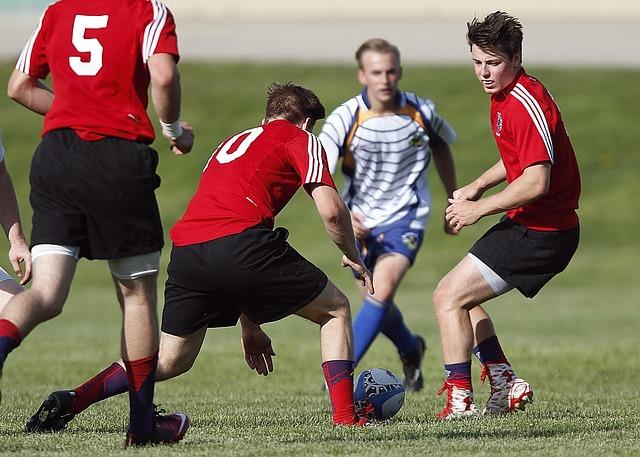
Access remains one of the most persistent challenges in covering high school sports, posing significant hurdles for journalists striving to provide comprehensive and timely reporting. As schools navigate concerns over privacy, safety, and competitive integrity, reporters often find themselves caught between the need for transparency and the restrictions imposed by athletic programs and administrations. This editorial examines the complexities surrounding access to high school sporting events and the impact these limitations have on local journalism and communities alike.
Challenges Facing Journalists in Securing Access to High School Sports
Journalists face a web of significant obstacles when trying to gain meaningful access to high school sports events. Increasingly, school districts and athletic departments impose stringent media credentialing processes, citing concerns over student safety and privacy. These restrictions often result in limited or delayed entry for reporters, hindering their ability to capture timely, accurate accounts of games and athlete performances. Additionally, some schools prioritize paid media partnerships, creating a competitive environment where independent journalists must navigate a maze of permissions and restrictions just to cover local sports stories.
Compounding these access issues is the growing trend of schools controlling not only physical attendance but also the distribution of digital content. Live streaming rights and game footage are often monopolized by exclusive broadcasting contracts, cutting off traditional and freelance journalists from essential visual materials needed for comprehensive reporting. Key challenges include:
- Complex credentialing with inconsistent standards
- Times and locations of games not publicly disclosed in advance
- Restrictions on player interviews and locker room access
- Exclusive media deals limiting content sharing
| Barrier | Impact on Reporting |
|---|---|
| Credentialing Delays | Missed game coverage and outdated reports |
| Exclusive Streaming Rights | Restricted access to game footage |
| Privacy Concerns | Limited athlete interaction |
| Unpredictable Scheduling | Difficulty in planning coverage |
Balancing Privacy Concerns with Public Interest in Sports Coverage
In the world of high school sports journalism, striking the right balance between respecting athletes’ privacy and delivering thorough coverage remains a persistent challenge. While the public’s interest in players’ performances and school rivalries is undeniable, reporters must navigate the fine line between transparency and intrusion. The stakes are higher when considering the age of these athletes-many are minors whose personal lives should be shielded from unwarranted exposure. As a result, ethical reporting requires careful judgment to ensure that coverage highlights the game, team dynamics, and community pride without crossing into sensitive areas that could harm the student-athletes.
Key considerations for responsible sports coverage include:
- Obtaining proper consent before sharing personal information
- Focusing reporting on athletic achievements and events
- Avoiding sensationalism related to off-field controversies
- Maintaining clear communication with coaches and school officials
| Factor | Benefit | Risk | ||||||||||||||||||||||||||
|---|---|---|---|---|---|---|---|---|---|---|---|---|---|---|---|---|---|---|---|---|---|---|---|---|---|---|---|---|
| Open Access to Games | Community Engagement | Privacy Breaches | ||||||||||||||||||||||||||
| Player Interviews | Humanizes Athletes | Potential Personal Overexposure | ||||||||||||||||||||||||||
| Social Media Highlights |
In the world of high school sports journalism, striking the right balance between respecting athletes’ privacy and delivering thorough coverage remains a persistent challenge. While the public’s interest in players’ performances and school rivalries is undeniable, reporters must navigate the fine line between transparency and intrusion. The stakes are higher when considering the age of these athletes-many are minors whose personal lives should be shielded from unwarranted exposure. As a result, ethical reporting requires careful judgment to ensure that coverage highlights the game, team dynamics, and community pride without crossing into sensitive areas that could harm the student-athletes. Key considerations for responsible sports coverage include:
|